Translate

Tuesday, 7 February 2012

Do You Like What you See When you Look in the Mirror?


We are all wonderfully and fearfully made. God created us in his image. Genesis 1:27 "And God created man in His own image, in the image of God He created him; male and female He created them." The words "image" and "likeness" are used in Genesis 1:26-27 as adjectives to express the idea of the whole man being created in this way.

Seeing is believing. All our perceptions and actions are influenced by “that image” which we hold to be true of ourselves. Once the process of conceptualization begins, it involves the developmental stages of life which has its many contributing factors that will mould its outcome. This self image that we have of ourselves determines what we think we can or cannot achieve as well as our judgments and beliefs that correspond to our capabilities. Past experiences, successes, failures, feedback from peers, comments from strangers, our environments and childhood experiences all contribute in some way or the other.

We are habitual creatures that constantly reaffirm “that image” which we have crafted of ourselves. We constantly strive to ensure that our future will be consistent with the “self image” that we hold to be true, with those actions and decisions.
People often focus on their imperfections: that scar, big ears, broad nose just name a few. These slight modifications soon become skyscrapers. They often overshadow the good points; hence self-confidence, self-acceptance, and self-love soon become self-loathing. 

There are several factors that contribute to how individuals view themselves. Some of these include: the media, family and friends, trauma, and accidents. The media is the fundamental factor towards self-image. Celebrities are often viewed with perfect-clear skin, narrow waist, curvaous stature. Family and friends often highlight the imperfections of their siblings. This can further impact the views held by the sibling. Self-pity will begin to fester. The loss of health or well-being through accidents or long term illnesses can negatively impact the individual’s perception of their self.

It is said that beauty is in the eyes of the beholder. This is not just related to how others might see you, it also relates to how you choose to see yourself. Real beauty comes from within. This concept primarily deals with how comfortable you are in your own skin. It therefore is very important that you like what you see and that you are able to distinguish what it is that you do not like from what you do

February 4, 1874


Among the many things that must have taken place in 1874, some fascinating ones occurred in February of that year. On February 21, of that year the Oakland Daily Tribune published its first newspaper. On February 23, Walter Clopton Wingfield patented a game called "sphairistike" which is more commonly called lawn tennis. However, among the gems of that year created on the 4th day of February is a hymn that was written by Frances Ridley Havergal entitled “Take my life and let it be”. This magnificent popular hymn of commitment still moves us to a greater sense of dedication to God. Here are the words:

Take my life, and let it be consecrated, Lord, to Thee.
Take my moments and my days; let them flow in ceaseless praise.
Take my hands, and let them move at the impulse of Thy love.

Take my feet, and let them be swift and beautiful for Thee.
Take my voice, and let me sing always, only, for my King.
Take my lips, and let them be filled with messages from Thee.
Take my silver and my gold; not a mite would I withhold.
Take my intellect, and use every power as Thou shalt choose.

Take my will, and make it Thine; it shall be no longer mine.
Take my heart, it is Thine own; it shall be Thy royal throne.
Take my love, my Lord, I pour at Thy feet its treasure store.
Take myself, and I will be ever, only, all for Thee.

I doubt that most people in the 21st century have come to this conclusion. The conclusion that our lives are not ours, and that we are merely stewards of our lives and our possessions. Not stewards of some things, but stewards of everything. If that value was at the core of all we do, then our lives would be remarkably different. Firstly, we would always ask how must I use these moments Lord; how must I use these abilities Lord; how must I use these possessions Lord: indeed, take my life and all that exists in it for Thee.

At Northern Caribbean University our core values are captured in the word CARES, so we speak of NCU CARES. The ‘S’ in CARES stands for Stewardship. It is the essence of this song that constitutes stewardship. Perhaps if we kept this song in our hearts the beat to which our lives would find its sweetest rhythm, would be the music of heaven. 


Tuesday, 31 January 2012

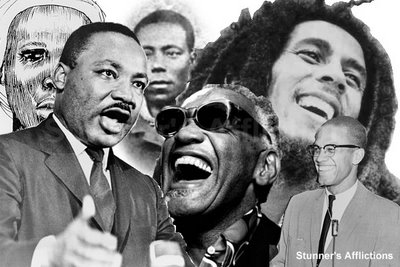
The History of Black History Month


Black History Month (BHM) is an observance of the history of the African diaspora in a number of countries outside of Africa. Since 1976, it is observed annually in the United States and Canada and the Caribbean in February, while in the United Kingdom it is observed in October. In the U.S., Black History Month is also referred to as African-American History Month.

Black History Month was begun as Negro History Week by historian Carter G. Woodson in 1926. His goal was to educate the American people about African-American history,focusing on African Americans’ cultural backgrounds and reputable achievements.
When Carter G. Woodson started Negro History Week, his purpose was for the history of African Americans to be considered a more significant part of American history as a whole. According to historian John Hope Franklin, Woodson “continued to express hope that Negro History Week would outlive its usefulness.” The purpose of Black History Month is to promote awareness of African American history to the general public. It is argued, that despite the opinions of several critics, Black History Month has several advantages, and to this extent, Woodson’s hopes were realized. During Black History Month, African American history is taught to thousands of students at the elementary, high school and university levels respectively predominately in North America and Europe. African American history is an extremely important part of American history, and it is almost impossible to find an American History textbook that does not include passages about black history.
Black History Month sparks an annual debate about the continued usefulness of a month dedicated to the history of one race. Several journalists argue the advantages and disadvantages of emphasizing one month of the year to promote African American History.
It is seldom argued that America’s youth does not at least somewhat benefit from having an annual Black History month, however, several critics argue that the adult population now perceives the month of February from a different angle. One question that has been raised is in regard to why the month chosen to celebrate Black history is February, which is the shortest month of the year.

It is argued that Black History Month has become a “ready-made excuse to ignore African American history from the other 11 months of the year,” thus promoting racism. Journalists argue that by dedicating a single month of the year to black history, it provokes a tendency for people to assume that black history is separate from American history. Joseph Wayne states that “one month out of every year, Americans are given permission to commemorate the achievements of black people. This rather condescending view fails to acknowledge that a people and a country’s past should be nurtured and revered; instead, at this time, the past of black Americans is handled in an expedient and cavalier fashion denigrating the very people it seeks to honour.” Prominent African-American Morgan Freeman has publicly condemned BHM, asking "why would you relegate my history to a single month?" 

Other critics claim that Black History Month has become a marketing or commercialization month, providing the opportunity to advertise and sell more goods. Owen Alik Shahadah states that "Black History Month without a memory of Africa is moot" in reference to the commercialization of the month which he claims focuses more on Black celebrities rather than ancient African history. Society is missing the “essence of Carter G. Woodson’s dream” and in many cases companies are using the commemoration month to their advantage. Black History Month has somewhat lost its significance among American society as the month of February is also American Heart Month, International Boost Self-Esteem Month, International Embroidery Month, Library Lovers Month, National Cherry Month, National Children’s Dental Health Month, National Snack Food Month, and Return Shopping Carts to the Supermarket Month.

It can also be argued that Black History Month has now been diversified into the idea of promoting multiculturalism within communities, rather than promoting awareness of the history of African Americans. Whether or not this statement is true, Carter G. Woodson believed that black history was a missing segment in the minds of most American Historians of his day.