Thursday, 17 May 2012

Don’t ‘romance without finance’


IF you are anywhere near my age, or let’s just say if your age is already off the calendar, chances are you will still remember the popular Gwen Guthrie song that says, “No romance without finance, you’ve got to have something if you want to be with me”.
What the songbird was really saying is that anyone interested in being with her, or anyone interested in romancing her, would have to also finance her lifestyle as well.


Maybe back in those days some of you blurted out the lyrics without giving consideration to what the artiste was saying, or maybe some of you thought the song was written for mere singing only. However, on a very serious note, would you be interested in a man who is interested in only romance when he is low on finance? I mean, if you are not in a position to finance him and he is only talking romance, how would that go down with you?
Before you begin to quote me out of context, let me just say I am referring mainly to those who are single and looking.
Well, you may or may not agree with the ‘no romance-no finance’ rule, but my take on the matter, especially for those who are thinking of making the bold step to tie the knot, is that if there is no finance, be careful. If you believe I am pulling my thoughts from the top of my hat, think again, or better yet, reason with those who have tried to romance without any source of finance and get the facts.
If you are aware that the three letter word, the one beginning with S, is now considered a physiological need, with other lower level needs such as love, belonging and safety, you might be thinking that romance should not be dependent on finance. Yes, romance entails much more than finance, and love is much more than money, but it still holds true that it takes cash to care and it can be risky and reckless to be making out on hungry bellies. I don’t really want to turn up this thing so let me just list three pointers for those who still believe in romance without finance.
1. You can become frustrated. When there are bills to pay and there is no money it will affect you emotionally and also physically. It can also interfere with your ability to concentrate and this will increase your stress level. Remember now, stress kills.
2. You can have a ‘financial breakdown’ if a child comes in the picture and you cannot afford basic items. When only adults are involved or experiencing the hunger pangs, that’s one story, but when children are affected, and you don’t have a ‘penny’, do you not think that’s evil?
3. Finally, it is irresponsible behaviour. You were ‘bought with a price, created in the image of God and your body is the temple of the Lord’, therefore everything that you do should be an act of praise. The God who made you is expecting you to be responsible and one way to be responsible is to take care of your finances first and conduct your affairs in a responsible manner.
Romance can wait. Older people used to say, “Romance not going anywhere, it is not running away” and if it could be finished it would be done before you were born. So, if you are convinced that you’ve found the one and there is a financial challenge, you can put the romance on hold and sort out yourself. What I am really saying right now is this — if you are thinking romance and there is no finance, think twice!
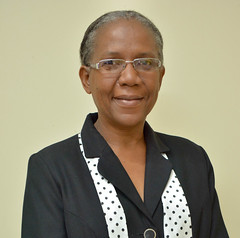
Jacqueline Champier, MSc, is a counselling psychologist from Mandeville.

Wednesday, 16 May 2012

Water: A Sacred Commodity


Life without water, hard to imagine isn’t it? Life on this planet would literally cease to exist. There is water on this planet though; the problem is that it isn’t evenly distributed. The absence or low availability of water in some places is the cause of some really dire living conditions.

Did you know that every 21 seconds, a child dies from diarrhea? Around 1.5 million deaths each year - nearly one in five – are caused by diarrhea. It kills more children than malaria, HIV, AIDS, and measles combined. This amounts to approximately 4,100 deaths a day. This singular killer often employs contaminated water as its mode of operation. One might ask so if the water is bad for consume or come in contact with it? The answer is simple, that is the only water they have and they may not know it’s going to affect them or they don’t have other alternative. Water is considered a sacred commodity in some parts of the world; not even a single drop should go to waste. Water might be everywhere, but one must never take it for granted. On an even more personal note, your body needs water and water plays many pivotal roles in bodily functions.

. 1 a 1 a 1 aa 1 a wata.jpg

The entire human body is made up of 70% water. 95% of our brain is water, while the blood has 82%, and the lungs have 90%. Studies have shown that if our water content is to fall by a mere 2%, the body will show signs of dehydration. The body cannot function without water; just as car cannot run without fuel. All the cells and organs in the body depend on water for proper functioning.

In addition to the daily maintenance of our bodies, water also plays a key role in the prevention of diseases. Did you know that drinking six to eight glasses of water daily can decrease the risk of colon cancer by 45%, bladder cancer by 50% and it can potentially even reduce the risk of breast cancer?

Water also acts as a cooling agent. Water's ability to hold large amounts of heat energy helps plants and animals lower their temperature. When an animal sweats, the sweat accumulates on the skin or other porous locations, transferring the heat from the inside of the body to the outside. When water evaporates the heat leaves the body as well, cooling the animal. Plants use a similar tactic called transpiration. During transpiration, water is lost through small openings in the leaves called stomata. When water evaporates this loss creates a pull within the plant, forcing water to enter through the roots and travel upward to the leaves. This movement of water, caused by evaporation, replenishes the plant with cooler water and lowers the plant's temperature.


Water is life. Without water there is not life. Plants are not able to carry out photosynthesis, animals are not able to digest their food properly and regulate their body temperature. Similarly, we are not able to function without Christ in our lives. He is the backbone in our lives. We need him to survive. He is the air we breathe, the light to our paths, and without Him our lives have no meaning. In John 7:38, “Whoever believes in me, as the Scripture has said, streams of living water will flow from within him”. The bible here depicts Christ as a vessel from which “living water” will flow. Jesus Christ has unlimited supply of solutions. He alone can supply all our needs and solve any problem.


Mikki Clarke 

Tuesday, 15 May 2012

The Impact of the Lack of Preparation

What if? A question asked by many individuals around the world. The question of what if usually follows subsequent to a bad decision that was previously made. Often, decisions are made without thinking them through. Hence, many individuals usually experience what is known as “the after effect”. The lack of preparation can be quite detrimental in some instances. So what is the effect of the lack of preparation and what effects does it have on the body? What strategies can used to ensure that you are prepared?

Many individuals tend to procrastinate when there is alot of work to be done. They usually occupy their time with other less important tasks such as: checking an email, watching a movie, or visiting a friend. These behaviours usually negatively affect the individual. Their character may be defamed, someone’s life could be threatened, (or in the case of students) they may fail their courses. In some cases, individuals lose their jobs due their lack of responsibility. The lack of preparation does not just affect us mentally; it also affects us physically.

. 1 a 1 a 11 a 1 mikk.jpg

 
The anxiety of worrying about an overdue assignment coupled with an upcoming sectional can be quite stressful to an individual. Whenever the body is stressed a chemical called cortisol is produced. This chemical has been shown to destroy brain cells. It also contributes to weight gain (usually around the mid-section). This accumulation of weight around the mid-section can render an individual susceptible to heart disease. Stress can also cause dilation of blood vessels, enlargement of pupils, increased production of sweat, increased heart and breathing rate, and slow down the metabolic rate.

Here at Northern Caribbean University (NCU) another spring semester has come to an end. Many students are currently revising for their final examinations. Some are certain of that “A”, while others are struggling to get at least a “C”. At the end of each semester you will come across students whom have not completed all the required assignments for a particular course. This is as a result of their lack of preparation.
Many students failed to prioritize their tasks throughout the semester. They will testify of having a procrastination problem. As a result, you will observe them “scattering around” to get that assignment in. In most cases, their immune system becomes overwhelmed with stress, thereby decreasing its ability to fight off microorganisms and viruses. As a result, students often develop the common cold during exams.

Though there are individuals who fail to prepare themselves, there are those who utilize various strategies which enable them to be prepared. In order to be prepared one must ensure that he/she understands what is to be done. Always have systematic plan or goal. What is it that you would like to get achieved? How can it be achieved? What steps or measures can be taken to ensure it is achieved? Once you have answered all these questions, draft a checklist that can be used to guarantee that all the requirements have been fulfilled. Whatever the situation may be, I am certain that you will be more than prepared to take on the task.

Mikki Clarke

Monday, 14 May 2012

I Only Followed Orders: Oh Really?

Do you suppose that in every instance where an individual becomes culpable in a fraud case it necessarily originated with that individual?  To what extent do you think some might have just been caught and carried away in a current of corruption?

Granted, some individuals are sometimes only too happy to hop on to a gravy train and would kid themselves that they are not culpable (they were only following instructions).  Well, the precedence has already been set, and the word is clear: notwithstanding instructions coming down to you, you will be held responsible for actions that you should reasonably know better than to do.

. 1 a 1 a 1 bl.jpg
A positive pattern to follow - file

Another defence or justification that some individuals offer for their involvement in a corruption ring is that they have their mortgages, or kids in school, or the simple fact that a job is a precious commodity, and they couldn’t risk losing it.
Again, the law is clear: you are responsible for what you do.  There is no hiding behind anything or anyone to escape assuming responsibility for all we do.  Of course, we may do things that no one ever did seem to find out about, and we’re never held culpable in this life for, but….

There is another hearing in another court, a much higher court that we all must attend.  Interestingly too the same kinds of defences may be staged as we defend our actions.  But much like earthly courts in Heaven’s court everyone is held responsible for what they do.  But a difference with this higher court is that it addresses issues that are not within the purview of earthly courts to adjudicate on: as Samuel puts it, “Man looks on the outward display; God looks at the heart.” 1Sam 16: 7.  You are responsible for all you do, so do what will bring the consequences you will be happy with.

Friday, 11 May 2012

Eve's Nutrition


Marsha N. Woolery
Regardless of the age of becoming a mother, nutrition plays an important role in the health of a woman. Women from puberty to menopause and beyond have different nutritional needs than men. Becoming a mother during the adolescent stage can be challenging because adolescent girls have increased nutrient needs for growth and development. If these needs are not met, it may result in anaemia, compromised growth and development and negative body image (too fat or too slim).
Sardine bones
Protein in the form of low-fat foods from animals (milk, cheese, chicken, beef etc), peas, beans and nuts are needed for growth and development. Calcium-rich foods such as milk, cheese, dark green leafy vegetables and the bones in small fish such as mackerel and sardines are needed for the strengthening of bones and teeth.
Bones are at the maximum strength (peak) by age 25, hence the need for calcium. Iron is needed to replace blood that is lost during the menstrual cycle and prevent iron deficiency anaemia. Iron-rich foods include dried peas and beans, dark green leafy vegetables, beef and liver. Zinc, which is found in chicken, fish, egg and milk is needed for growth and sexual maturation. Energy is needed to maintain a positive body image by not consuming too much fat, especially the saturated type and cholesterol.
Sugary foods
Lowering the amount of sugary foods, such as sodas and fruit drinks, including bag juice and sweet biscuits and pastries, is recommended. Vitamin-rich foods such as fruits, vegetables, peas, beans and whole grains are needed for the skin and to get energy from the carbohydrates and fat-rich foods and for using the protein for growth and development.
Folate which is found in dark green leafy vegetables and citrus fruits is for women in the childbearing age because it assists with the formation of the unborn child's spinal cord in the first six weeks of pregnancy (before most of us know that we are pregnant).
The adult and ageing mother has similar nutritional needs to the adolescent. A reduction of total fat intake, especially the saturated type (butter, lard and animal fat), cholesterol (found only in animal products) and trans-fat (pastries and baked products) is recommended to lower the risk of heart disease, obesity and breast cancer.
Calcium should be increased to reduce the risk of osteoporosis. Dietary fibre (roughage) and vitamins should be increased by eating more whole fruits, vegetables, peas, beans and wholegrain products to prevent or treat constipation, lower cholesterol, blood sugar, blood pressure, reduce the risk of heart disease and certain cancers.
The mother who is having difficulty chewing or swallowing should eat foods that are mashed, blended and adjust flavour as changes in the taste buds occur with age.
Marsha N. Woolery is a registered dietitian/nutritionist in private practice and adjunct lecturer at Northern Caribbean University.
Dear Ms Woolery,
Is it possible to reach a peak whereby you are no longer able to lose weight?
Dear Reader,
The response is yes. When losing weight it has a lot to do with the amount of body fat compared to muscle, meaning the body composition. Therefore, it is important to measure the body-fat percentage. From the information provided, you want to make sure you are doing physical activity for five days per week for at least 30 minutes each day. The duration of activities should be increased and also the intensity to ensure the burning of energy and the building of muscles. Please note that when one exercises, the body is building muscle and muscle weighs more than fat hence the weight may appear stable or even more in some instances.
This may be discouraging and hence the importance of measuring body composition and not only body weight.
As it relates to nutrition, ensure you have reduced your food intake by approximately 500 kilocalories (kcal) per day. This will result in 3,500kcal per week, which is equal to a pound. The recommendation for healthy weight loss is one to two pounds per week, which will decrease if exercise is not a consistent part of the weight- loss programme. Make sure you are not eating less than three hours before going to bed.

Tuesday, 8 May 2012

May is Child's Month


“I want to be a doctor”. “I want to be a policeman”. “I want to be like mummy when I grow up”. “Well, I want to be like daddy when I grow up”. These are the words which have been uttered by millions of children around the world. As adults, we once uttered those words too. Yet, there are numerous children who cannot say the same. Their little minds are preoccupied with questions such as: “What will I eat today?”, “Where are my parents?” “Why am I being neglected?” Will mummy hate me if I don’t come home with any money? The entire month of May is being celebrated as Child’s month. Many use this time to emphasize the voices of our young children; yet throughout the other eleven months of the year this emphasis is not highlighted. I believe that our children should be celebrated, heard, and loved 365 days a year. So then, who is a child? What are some of the rights of a child and how can you support a child’s dream?

On Wednesday April 06, 2012, National Child’s Month was launched under the theme “Our World...Their Future...Our Responsibility”. Dr. Pauline Mullings, chairperson of the National Child’s Month Committee explained that the theme was geared towards encouraging parents and caregivers to be more responsible in the care and nurturing of our children. She continued, “we have left the training and guidance of our children to the computer, mainly the Internet; the television, advertisements, print and electronic media, and these influences have turned out to be negative for our children.”(Jamaica Observer) Mrs. Mullings spoke about celebrating our children. The word celebrate is often used when referring to parties and festive occasions. However, its Latin origin means “to honour”. We know that “to honour” means to hold in esteem or to show respect.

. 1 a 1 a 1 aa 1 a cldn.jpg
Children at a recently held Community Music Programme at NCU - file 

The definition of a child under the Convention on the Rights of the Child (CRC) covers all human beings under the age of 18 unless the relevant national law recognises an earlier age of majority. However, the Convention emphasises that the substitution of an earlier age of majority must be in conformity with the spirit of the Convention and its guiding principles and thus should not be used to undermine the rights of a child. In layman terms, a child usually refers to those individuals under the age of ten. Though the CRC (Convention on the Rights of the Child) defines a child as someone under the age of 10, many adolescents’ are child-like in nature. Some teenagers have to “grow up” before time to take care of their younger sibling. This forces them to take on the responsibilities of an adult neglecting the daily pleasures of a child.

All children have the same rights. However, their rights are violated in many countries, and children do not benefit from the same rights. The rights of a child encompass the fundamental principles of all human beings: the right to life, the non-discrimination principle, the right to dignity through the protection of physical and mental integrity (protection against slavery, torture and bad treatments. Children rights are civil and political: such as the right to identity and nationality, economic, social and cultural (the right to education, a decent standard of living, and health), individual rights (the right to live with his parents, the right to education, and the right to benefit from protection). A child’s right may also be collective (rights of a refugee and disabled children, rights of minority children or children from autochthonous groups).

How then can you support the dream of a child? As parents, role models, and caregivers it is very important that we foster the development of our children’s dream. We can do this by providing avenues that will steer them in the right direction. Always seek to provide opportunities (educational, motivational or financial) that can improve their mental, physical, or social ability. Don’t turn a blind eye to a neglected child. Make a difference today; promote, defend and make a child’s rights a reality. 

Mikki Clarke 

Friday, 4 May 2012

Truth among Distorted Facts & Darkess amidst Truth


“To the law and to the testimony, if they speak not according to this word it is because there is no light in them.” Isa. 8: 20.

How many demoniacs did Jesus heal at the Gaderenes? One (Mark 5, Luke 8)…two (Matt 8)? Not certain.  And did the sun really stand still?  Well, for the sun to have been made to stand still in the context of Joshua 10: 13, it would have had to be moving, right? It is common knowledge today that the sun doesn’t actually move, but it is the earth that moves (rotating on its axis, while revolving around the sun).  How do we relate to these inconsistencies in Scripture – can it be trusted to supply us with pertinent truth so vital to our eternal salvation?

According to 1 Cor. 13:8 knowledge will become obsolete.  But for the present what we now know is relevant to the time and place of our existence.  When we would have finally transitioned we will no longer need many of the things we now depend on for our survival.  The burden of Scripture is not to provide us with an often unnecessary litany of facts surrounding a story or of a natural phenomenon.  Its purpose is to simply bear witness to the fact that God is, and that He rewards those that earnestly seek Him. Heb. 11: 6.  The real truth then of the sun “standing still” is that God controls nature, and when we have genuine need he will reverse the course of natural occurrences to give us victory.  The healing of the demoniac(s) speaks to the difference that Christ makes when He comes onto the scene of our lives – whether He healed one or two individuals, the point is He has the power over the demons in our lives, be they legions or one. 

Do not then become preoccupied with the accumulation of facts that are going to become of none effect anyway.  Look instead for the truth as it exists in God’s Word.
Note, the preceding discussion in no way relates to the issue addressed in Rev. 22: 18, 19.  Persons who wilfully distort or hold back on the facts surrounding an event will be held accountable for this manipulation of Holy Writ.

While truth has a singular importance to those who would discover God, fall within His divine will and approbation care must be taken to preclude its misrepresentation by being wrest out of the proper context in which be understood and received.  Taken out of its context, or being inappropriately aligned to falsehood truth can become shrouded in darkness, and therefore ineffective to perform its important work of sanctifying its discoverer (John 17: 17). 

Jesus understood the importance of the timeliness of truth being disclosed and so told His disciples, “I have yet many things to say unto you, but ye cannot bear them now.”  The Apostles Paul and Peter themselves spoke of the milk (simple nature) of the Word, which should be fed to new converts, who were to later move unto more solid food. 1 Cor. 3: 2; 1Peter 2: 2.  Rev. 22: 18, 19 speak of distortion either by adding or taking away of pertinent aspects of the truth of God’s Word.

So although truth may be covered in the mud of inconsistent facts it does allow for us to handle it in any way that suits us – it must be treated with care and caution, and not in a manner that would not prompt the release of faith in accepting its principles.  Otherwise truth that is intended to be light (Ps. 119: 105), will be nothing but darkness.  God forbid.