Translate

Monday, 20 April 2015

Do Not Lie on Your Résumé

Do not lie on your résumé

Career Advisor
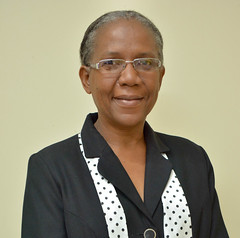
Carolyn Marie SMITH
  
Dear career advisor,
I am applying for a job, the advertisement for which asks for experience at a level above my current job title. Is it OK to change my job title on my résumé to match what they are asking for?
CMS
Dear CMS,
It is very important that every detail on your résumé be accurate and honestly convey your abilities and achievements. Do not be tempted to embellish your qualification or experience. It is a matter of integrity. Your employer or prospective employer is at liberty to check your background before and after you are employed. People have lost their jobs in the past because it has been discovered that they were less than honest in their claims at application.
Bear in mind, too, that job titles often vary from one company to the next. However, the functions under those different job titles may very well be the same. So, instead of changing your job title, use the narrative under the employment section on your résumé to show that you have the requisite experience and accomplishments.
Good luck.
Dear career advisor,
I am very frustrated in my present job. I would like to search for a new job, but I am scared my boss will find out as she is well connected. Can I be fired for job hunting?
Scared
Dear Scared,
In Jamaica, legally, you cannot be fired for job hunting. Termination must be in accordance with local labour laws, which require that employers provide just cause for termination. Notwithstanding your legal rights, you have to bear in mind that all employment relationships are guided by what has been agreed by the parties in contract, and the code of conduct specific to that organisation.
If it is revealed that you are job hunting, your employer might form the impression that you are no longer interested in the job and further, that you are not sufficiently motivated to perform as expected. Additionally, remember it is not ethical for you to use the employer's resources (which includes computer, paper, telephone, company e-mail and time) to advance your job search.
It is worth mentioning that in most states in the USA many employment contracts are entered into under terms referred to as 'employed-at-will', which means that an employee can be fired for any reason, or for no reason. In such circumstances, you would have no legal recourse if you are fired for job hunting as the employer does not have to give a reason for the termination.
Dear career advisor,
What's the best way to contact a potential employer after you have sent in a résumé and/or application, without seeming like a pest?

Tuesday, 14 April 2015

'Help! I have changed my major three times'

CAREER ADVISOR


With Carolyn Smith

Dear career advisor,
I have changed my major three times since starting university. At first I was doing English, then I switched to education and now I'm doing mass communication. The problem is, I still don't think it's the right fit. If I change again my parents are going to have a fit. What do I do?
Lost
Dear Brave (formerly Lost):
Firstly, you need to be commended for bravery in that you do not follow slavishly a path for which you perceive might not be what is right for you. It might be, however, that you now need to re-examine strategies you employ when making the decisions regarding your major. Based on your selections so far it appears that you have a leaning towards the liberal arts.
Understandably, your parents would be concerned if it is perceived that you are making these changes without due consideration (not to mention the expense incurred). Bear in mind, however, that no learning is wasted and even where academic credits are not transferrable to another programme, knowledge gained and skills developed can be of relevance to any industry.
The selection of a major is often associated with the career you intend to pursue. As a first step, therefore, it would be prudent for you to identify your desired career pathway which would then inform your selection of a major. Deciding on a career path may require that you:
i. Assess yourself. Career tests are valuable tools for doing this. Your Career Services Centre or your Counselling Services Centre are good places to get assistance.
ii. Create a list of careers for which you have interest and narrow the list after each step below
iii. Explore the options on your career list.
iv. Conduct Informational Interviews. This can be done face-to-face or 'follow' the individual's career progress on a professional network
v. Write a career action plan.
vi. Use the information gleaned about yourself and the desired career pathways to decide on your major
A systematic approach, such as suggested above, will assist you in making your career decision.

Dear career advisor,
I have been hearing a lot about the logistics hub and the number of jobs it is supposed to create.
What possibilities do you think there are for me? I have five CXCs and I am going to resit Maths in June.
BA
Dear BA:
Congratulations on your attainment at the CSEC level and also for deciding to re-sit Mathematics. You may want to consider enrolling in a tertiary level programme to better prepare yourself for employment. Mathematics is usually a requirement for entry in most of these programmes. Additionally, mathematical reasoning abilities enhance your employability skills.
The term logistics hub is really the central area of operation in Logistics and Supply Chain Management. With the impending expansion of the Panama Canal, the industry is presently booming. It is a growing industry that ensures that goods and services are delivered to consumers on time. There are many types of jobs in this industry, which can be loosely categorised as:
+ Direct Services: managerial, skilled (egs. languages, Information Technology, sciences, environmental science, geography, mechanics) and non-skilled jobs (egs. drivers, warehousing, customer service) are included in this category
+ Indirect Services: These include positions in academia and training, production of goods, provision of services, language skills, and economics.
Undoubtedly, among the plethora of career opportunities that the proposed logistics hub will provide you would be able to find jobs for which you skills would be a great match.


Carolyn Smith director of Career & Employment Services at Northern Caribbean University. Contact her at careeradvisor@ncu.edu.jm

Thursday, 26 March 2015

Take A Healthy Bite For Longer Life


When I was a child, Grandma always warned us not to use our teeth to dig our graves. Now she is 106 years old and as strong as a lion, while some of her children and grandchildren are ailing from nutrition-related illnesses such as diabetes mellitus, high blood pressure and obesity.
How healthy is your bite? Are you digging your own grave with your teeth?
March is National Nutrition Month and it is important for us to focus on what we are biting into. Research and personal experience - yours and mine - have shown that the foods we eat contribute either to our health or ill-health.


Why Eat Healthy?


• To improve our immune system and reduce the risk of developing certain illnesses, even the simple flu.
• Prevent unintentional weight gain and weight loss.
• Reduce the risk of developing certain types of cancers such as colon, breast and
stomach cancers.
• Reduce the chances of developing heart disease, high blood pressure and diabetes mellitus, and being overweight or obese.
• Control blood sugars, blood cholesterol, blood pressure and body weight.
• Better rest or sleep.
• Improve overall quality of life.


Tips For Taking A 

Healthier Bite


• Eat smaller amounts of food at meal and snack times.
• Eat and drink from smaller plates, bowls, cups, mugs.
• Eat away from the kitchen, pantry, kitchenette.
• Chew foods slowly ... at least 32 bites.
• Eat then wait about 20 minutes before going back for seconds or more food.
• Use more natural seasonings and spices instead of those that are artificially flavoured.
• Eat a handful of nuts every day.
• Eat three to five servings of fresh or frozen fruits and vegetables every day. Eat more salads than cooked vegetables.
• Limit sugar, honey and molasses intake.
• Use less oil, margarine and butter in meal preparation. Bake, boil, steam and stew instead of frying.
• Use plant- or vegetable-based oils that are high in unsaturated fat such as coconut, corn, canola or olive oils.
• Eat less salt and salty foods. Limit sodium intake to one teaspoon (2,500mg) per day for a normal healthy individual. If you have diabetes mellitus, high blood pressure, kidney disease, limit sodium intake to half-teaspoon or 1,500mg per day.
• Read food labels carefully ... the less ingredients in the products, the better.


• Eat less servings of carbohydrates-rich foods. It is a part of our culture to eat lots of 'tough food', rice, bread, pudding, dumpling and crackers. Choose three to five, half-cup or four-ounce servings of carbohydrates-rich foods at each meal. Persons who are more physically active should do the upper limit (five) and inactive or overweight persons the lower limit (three).
• Drink or eat about two to three servings of cow's milk or milk products per day. Adults and children need milk for protein, calcium and naturally occurring vitamins and minerals. If you are lactose intolerant, use soy milk, processed milk products or less cow's milk along with your meals. Processed milk such as yogurt and natural cheese (cheddar, mozzarella) have less lactose.
• Drink more water instead of juice, drinks or sodas. Try flavouring your water with lime, lemon, ginger, orange or your favourite fruit or vegetable.
As we celebrate Nutrition Month this March, let us make healthy food choices, chew slowly, wait 20 minutes after eating to decide if we are still hungry and want more food, eat smaller portions or less foods to prevent or control illnesses such as diabetes mellitus, high blood pressure, certain types of cancers and heart disease.
Let us salute the work of our registered dietitians, registered nutritionists and other nutrition advocates.
STOP DIGGING AND START LIVING!
- Marsha N. Woolery, RD, is a registered dietitian/nutritionist at Fairview Medical and Dental Centre, Montego Bay, and adjunct lecturer at Northern Caribbean University. Email: yourhealth@gleanerjm.com